Since the start of the Iranian conflict on Feb 28th, significant macro developments have occurred. As a net exporter of oil, the US has been somewhat hedged against the negative implications of rising crude prices, especially when compared to the vast majority of Asian countries.
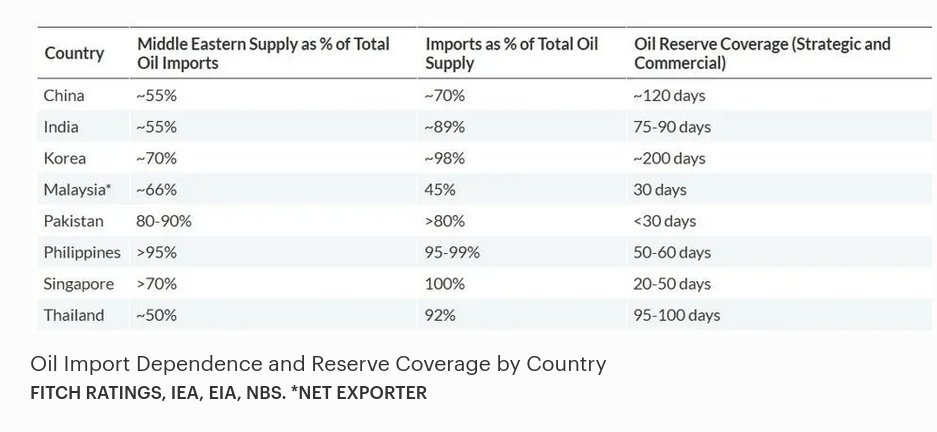
The US is the largest energy producer in the world and possesses a more diversified economy than most Asian nations, as it is predominantly service-based (think tech). Conversely, Asian countries import the vast majority of the crude oil needed to run their national economies. Specific dependencies include India (55% from the Middle East), the Philippines (95%), Singapore (70%), and Japan (90%).3
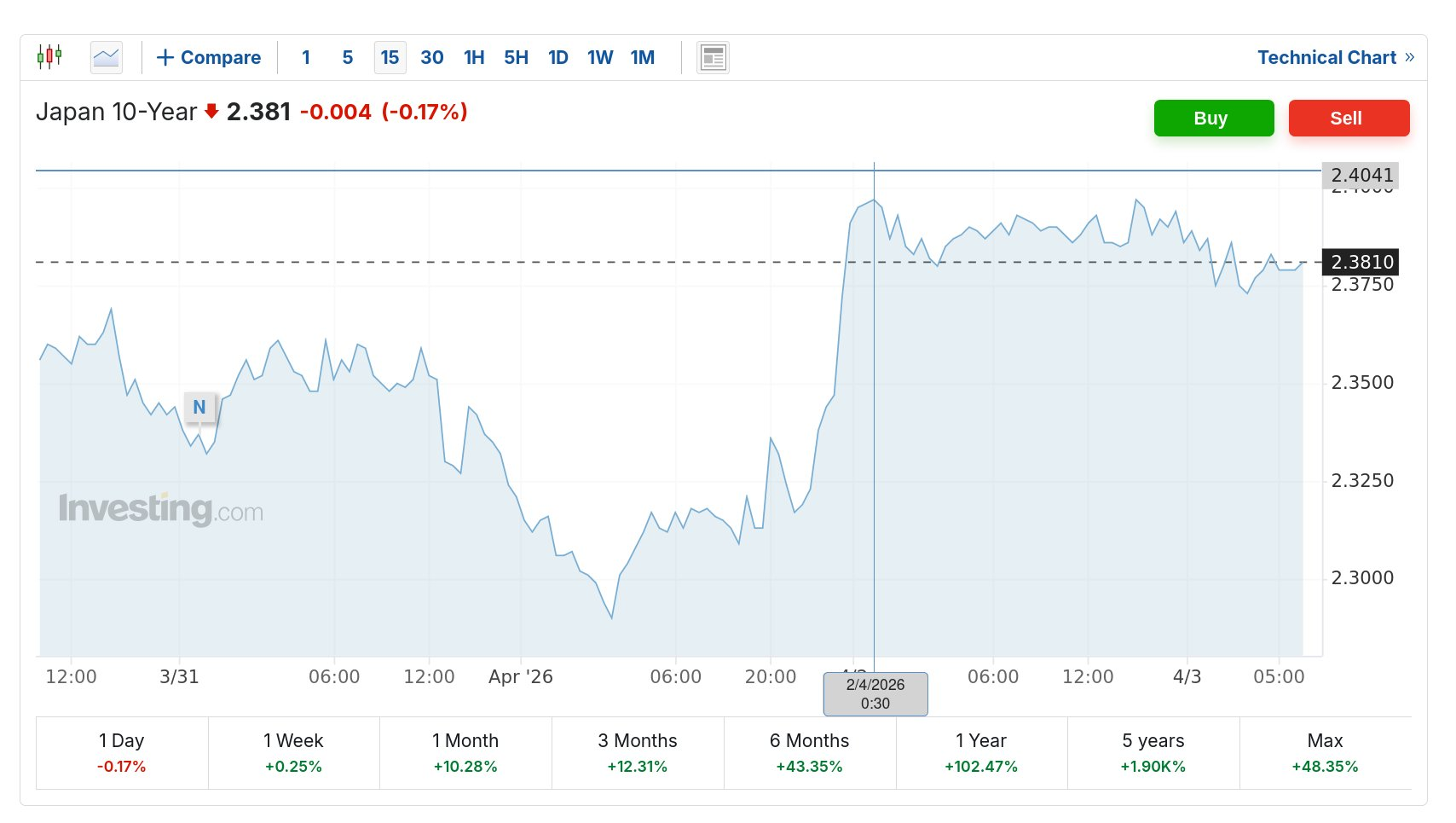
Bond markets in Japan are signaling distress. Yields on Japanese long-term government bonds have risen to their highest levels since the 1990s, with the 10-year yield reaching 2.396%.5
Global investors also divested ~$9.5 billion USD worth of Japanese cash equities in the week ending March 27th, with the market experiencing its worst week since 2008.1 Japanese equities had previously enjoyed a tailwind due to Sanae Takaichi’s fiscal spending plans, which had excited investors domestically and internationally. The Bank of Japan left interest rates unchanged at 0.75% in their last meeting but signaled that rate increases could be merited given the conflict’s implications.4 Notably, foreign investors bought 511B yen in Japanese long-term bonds during the week of March 21st, while Japanese investors divested ~635B yen of foreign long-term bonds for the second successive week4 — a clear flight-to-safety signal.
India and Taiwan are also experiencing serious divestment resulting from the conflict, with $1.4 billion and $1.1 billion respectively divested from their BlackRock MSCI ETFs in the last month.2 The Indian rupee has weakened against the US dollar, mirroring the trend across several Asian currencies as production costs have risen since the conflict began. India’s stock market was down 11% in March, recording some of the worst national stock performance in Asia year-to-date.2 Taiwan is particularly vulnerable as it is incredibly dependent on natural gas imports — a key commodity in chip production, which dominates the nation’s exports. Taiwan’s equity index fell 13% in March, its worst month since September 2022.2
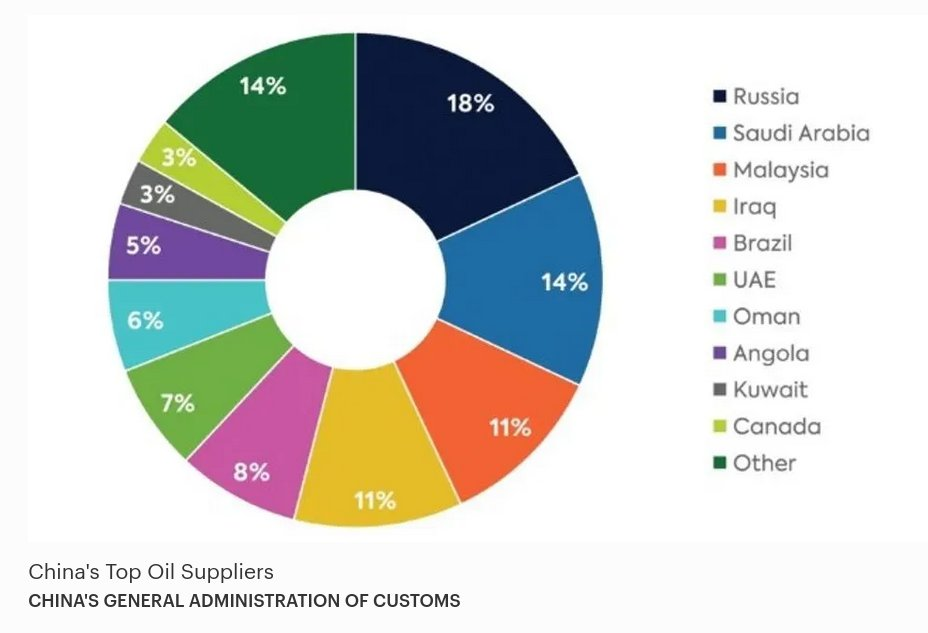
China is the notable exception among Asian nations. While it imports 70% of its crude oil needs, it is significantly more diversified in its sourcing. Only 55% of its oil comes from Gulf sources, and it counts Russia as a major single supplier.3
For market participants, there is no consensus. The American head of state is notoriously erratic, and talks of negotiations have been sporadic at best. The US strategy has been to escalate violence to turn the tides and force Iran to yield — a tactic that has so far proved unfruitful.6
Global stocks remain vulnerable to this president’s erratic behavior as the crisis looms. Even if the Strait opened today, the implications for crude products would take months to return to pre-crisis production levels. The International Energy Agency estimates that the war has already removed ~12M barrels of crude oil production per day, accounting for 12% of global production.6 Saudi Arabia and the UAE have diverted some of their exports away from the Strait, but Iran and Kuwait have been unable to do so to the same extent.6
A basket of Asian currencies has weakened expediently since the start of the conflict as inflation and growth fears persist. The long end of the bond curve across the US and Asia has also been increasing — certainly due to the conflict and its expected (and already experienced) inflationary pressure. The Federal Reserve is in a particularly tough spot; inflation pressures are elevated due to crude oil price increases (national American oil price now $4/gal, the highest in three years6), coinciding with a weakening labor market. This situation effectively leaves the Fed unable to cut interest rates as anticipated prior to the conflict, with market participants now pricing in rate hikes opposed to rate cuts for 2026.6
This conflict has been grossly unnecessary, and its implications for the global macroeconomic landscape have been deep and painful. The strain on America’s relationships in the region has passed the point of a simple resolution.
References
- Bloomberg, “Foreign Selling of Japan Stocks Hits 18-Month High on Iran Risk,” April 2, 2026. Link
- Bloomberg, “India, Taiwan ETFs See Record Exodus Before Asia Stock Rebound,” April 1, 2026. Link
- Forbes, “Why Asia Is Absorbing the Iran War Far Harder Than America,” April 1, 2026. Link
- Economic Times, “Global Markets: Mideast Worries Push Japan’s Weekly Foreign Equity Sales to 18-Month High,” April 2, 2026. Link
- FXStreet, “Risk Appetite Takes Hit as Uncertainty Lingers Post-Trump Address to the Nation on Iran,” April 2, 2026. Link
- US News, “Take Five: No Strait Talking Here,” April 2, 2026. Link